
CCLCS Co-Authors Landmark Global Study on Pesticide Exposure Among Farmers
CCLCS News & Research Spotlight
Faculty Achievement: CCLCS Co-Authors Landmark Global Study on Pesticide Exposure Among Farmers
Published: June 2026
Access the Publication
The full paper is available online for researchers, policymakers, and students interested in occupational health and safety dynamics.
🌐 Journal Portal: Sage Publications – WORK Journal
📧 Contact Department: oshe@cclcs.edu.tt
🏛️ Learn More: Discover our academic programs at the CCLCS Occupational Safety & Health Department.
Category: Research, Publications & Conferences
Department: Occupational Safety, Health and the Environment (OSHE)
Chaguanas, Trinidad and Tobago — As part of our ongoing celebration of 60 years of labour and learning, the Cipriani College of Labour and Co-operative Studies (CCLCS) proudly announces a major academic milestone by our faculty.
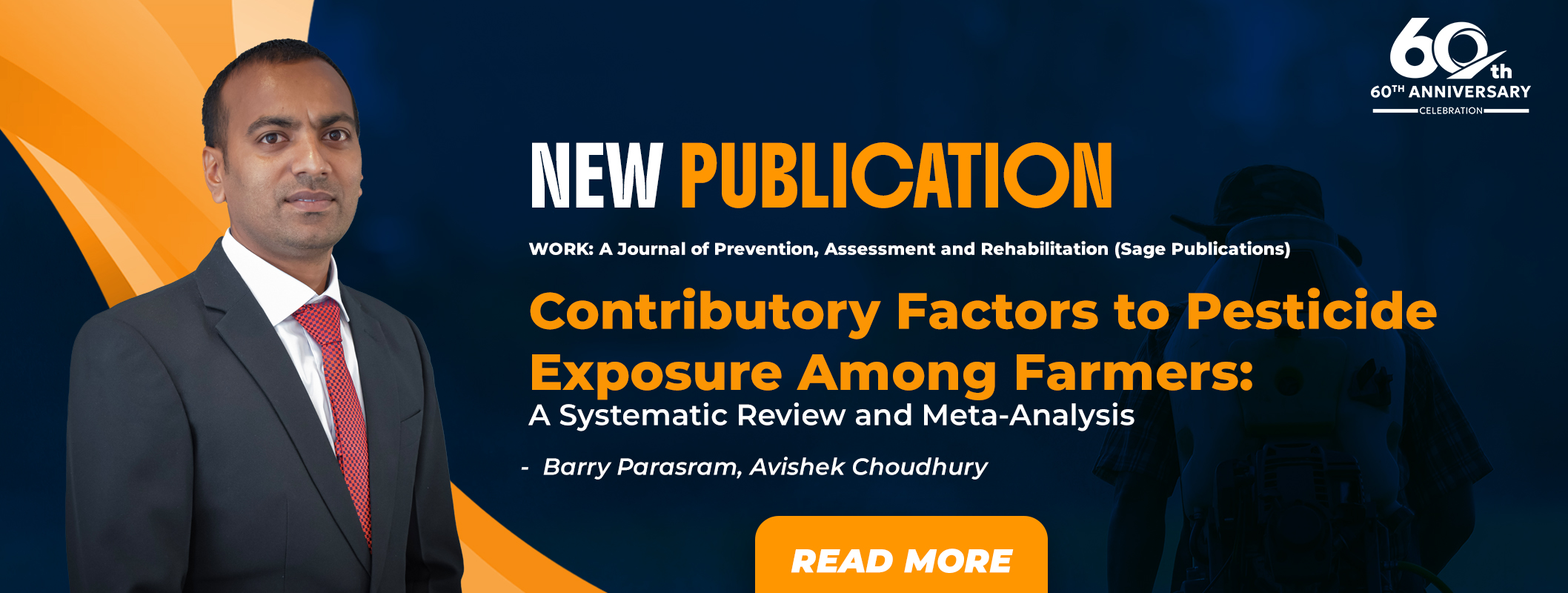
Mr. Barry Parasram, Senior Lecturer and Programme Dean of OSHE at CCLCS, in collaboration with co-author Avishek Choudhury, has published a groundbreaking paper in the prestigious peer-reviewed journal, WORK: A Journal of Prevention, Assessment and Rehabilitation (Sage Publications).
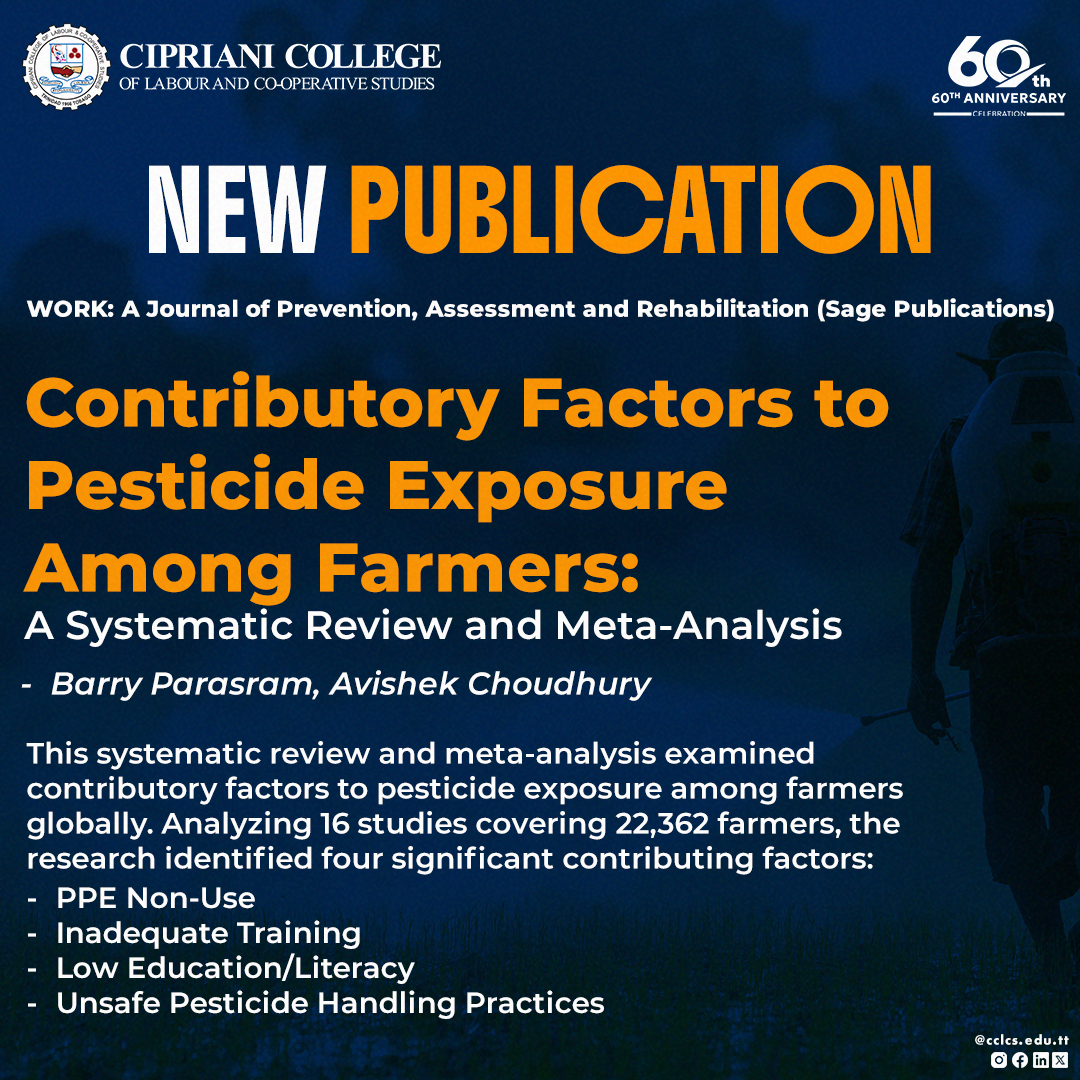
Their study, titled “Contributory Factors to Pesticide Exposure Among Farmers: A Systematic Review and Meta-Analysis”, addresses critical gaps in agricultural occupational safety both locally and globally.
About the Research
Agriculture remains one of the most hazardous sectors worldwide. This systematic review and meta-analysis was launched to look past localized data and uncover the global systemic drivers behind precarious chemical exposure.
Data Scope: Analyzed 16 rigorous studies
Population Represented: 22,362 farmers globally
Core Focus: Quantifying and identifying why farmers continue to experience high rates of acute occupational pesticide poisoning despite existing safety guidelines.

The Four Significant Contributing Factors
The meta-analysis successfully isolated four distinct, critical pressures that significantly increase pesticide exposure among farming communities:
PPE Non-Use: Entrenched barriers, discomfort, or cultural resistance to utilizing consistent Personal Protective Equipment.
Inadequate Training: A severe deficit in targeted, actionable safety and health instruction regarding chemical application.
Low Education/Literacy: Language or educational barriers that prevent farmers from properly understanding safety datasheets and chemical labels.
Unsafe Pesticide Handling Practices: Risky methods involving the mixing, application, storage, and improper disposal of hazardous agricultural chemicals.
Research Takeaway: The study demonstrates that traditional, voluntary safety guidelines are falling short. The authors advocate for urgent intervention from policymakers to implement mandatory PPE provisions, enforceable safety training, and robust regulatory oversight to protect agricultural workforces.
Meet the Authors
Mr. Barry Parasram is the Programme Dean for Occupational Safety, Health and the Environment at CCLCS. He holds a BSc in OSHE from CCLCS, an MSc in OESH (Distinction) from UWI St. Augustine, and an MBA from the University of Bedfordshire. He is a Graduate member of the Institution of Occupational Safety and Health (IOSH) and is extensively involved in regional safety and environmental initiatives.
Avishek Choudhury is an accomplished research collaborator focused on data analytics, human factors engineering, and systemic occupational health risk evaluations.